








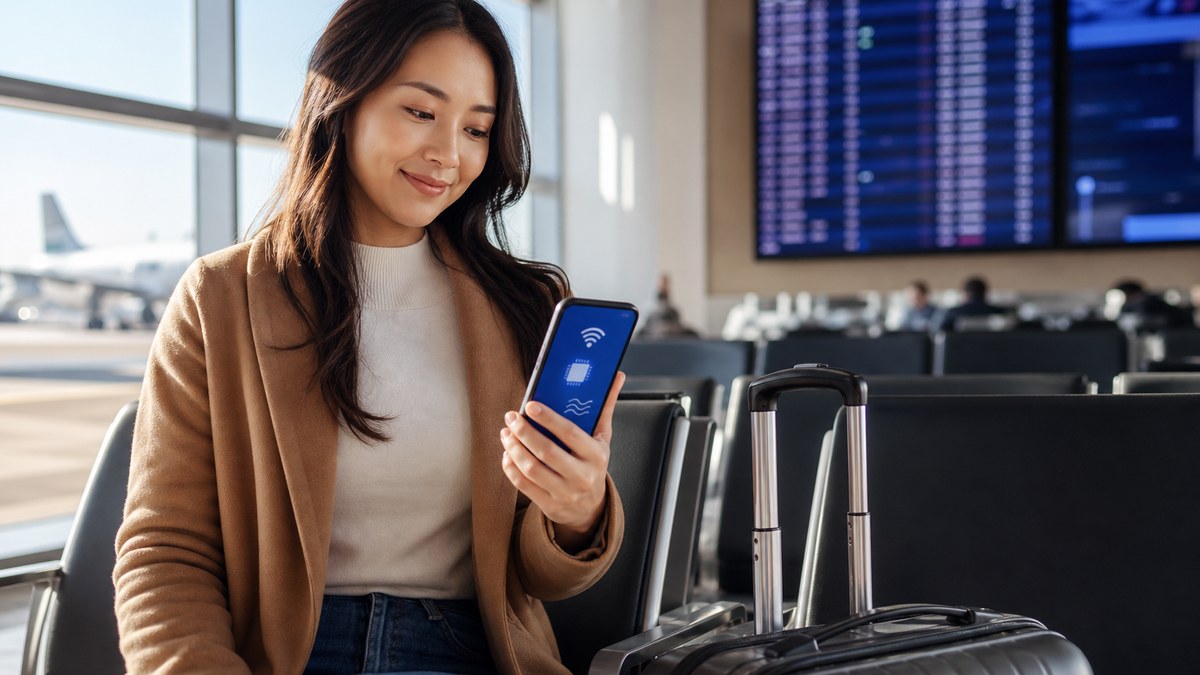
T-Mobile Prepaid is turning its next eSIM pitch toward visitors coming into the United States. In a May 7 announcement, the carrier said its new U.S. Pass eSIM plans will start May 18 with short-term options built for international travelers who need data, calls, texts, and hotspot access without opening a traditional monthly account.
The launch matters for phone-plan shoppers because travel connectivity is becoming a plan category of its own. Instead of sending visitors to airport kiosks, roaming add-ons, or a full month of prepaid service, T-Mobile is selling fixed-duration passes that can be activated digitally and used across the United States, Mexico, and Canada.
For U.S. residents, it is also a useful reminder: eSIM has changed how quickly a phone line can be bought, tested, and replaced. That can be good for short trips and backup service, but it also makes the fine print more important. Pass length, hotspot allotments, premium-data thresholds, device compatibility, and cross-border limits decide whether a plan is actually cheaper than roaming from home.
What T-Mobile is launching
T-Mobile says the U.S. Pass eSIM will be available starting May 18 through T-Mobile Prepaid. The company describes it as a digital-first activation product for international visitors, with no paperwork required and access to T-Mobile's 5G network in the United States.
The announced lineup has four durations:
- 7-Day Pass for $25: unlimited talk and text in the U.S., Mexico, and Canada; unlimited 5G data with 50GB of premium 5G data in the U.S.; 14GB of high-speed mobile hotspot in the U.S.; and 5GB of high-speed data while in Mexico and Canada.
- 10-Day Pass for $30: the same talk, text, 50GB premium-data, and cross-border terms, with 20GB of high-speed U.S. hotspot data.
- 14-Day Pass for $35: the same core terms, with 28GB of high-speed U.S. hotspot data.
- 30-Day Pass for $50: the same core terms, with 50GB of high-speed U.S. hotspot data.
Those hotspot buckets are the detail to watch. A visitor using a phone mostly for maps, messaging, rideshare, tickets, and restaurant searches may never touch the limit. A traveler who wants to tether a laptop every night could burn through the shorter passes much faster.
How the pricing compares in plain English
The headline price is not a normal monthly phone bill. It is closer to a travel pass. The 7-day option works out to about $3.57 per day, the 10-day option to $3 per day, the 14-day option to $2.50 per day, and the 30-day option to about $1.67 per day before any taxes or fees that may apply at purchase.
That means the 30-day plan is the obvious value for a full-month visit, but it may be overkill for a short work trip or vacation. The 10- and 14-day versions are the more interesting middle ground because they avoid paying for a full month while still including enough hotspot data for a tablet or laptop in a pinch.
The other comparison is against international roaming from a visitor's home carrier. Some premium plans include U.S. roaming, while others charge daily passes that can quickly exceed $25 to $50 over a week or two. Before buying a local eSIM, travelers should compare the total cost of home-carrier roaming against the T-Mobile pass length that matches the trip.
Who should consider it
The strongest fit is an unlocked, eSIM-capable phone used by a visitor who wants a U.S. number and predictable high-speed data for a defined trip. It also makes sense for travelers who need hotspot data but do not want to hunt for public Wi-Fi or rely on hotel networks.
It is less compelling if the phone is carrier-locked, if the traveler already has generous U.S. roaming from a home plan, or if the trip is short enough that airport Wi-Fi and a small roaming day pass are cheaper. Families should also check whether every device supports eSIM and whether each traveler needs a separate pass.
What to check before buying any travel eSIM
- Unlocked phone status: an eSIM plan will not help if the device is locked to another carrier.
- eSIM support: older phones and some regional models may not support the activation flow.
- Trip length: match the pass to actual travel days, not the calendar month.
- Hotspot needs: laptop tethering changes the math quickly, especially on the 7-day option.
- Roaming alternative: compare the pass against the visitor's home-carrier roaming price before switching.
- Coverage map: T-Mobile's network is strong in many cities, but rural routes, parks, and road trips still deserve a coverage check.
The SaveOnPhone read
T-Mobile's U.S. Pass eSIM is a smart packaging move because it turns a confusing visitor problem into four clear choices. The best feature is not just the price; it is the combination of a short duration, included hotspot data, and a digital activation path that does not require a full monthly account.
The caution is that travel plans are easy to overbuy. A 30-day pass is the best per-day value, but a traveler leaving after eight days may do better with the 10-day option. SaveOnPhone's advice is to start with the trip length, estimate hotspot use, then compare the result against home-carrier roaming. If the phone is unlocked and T-Mobile coverage fits the itinerary, the new pass gives international visitors a cleaner U.S. wireless option than many airport-counter SIM deals.
Sources
- T-Mobile Newsroom, “Land. Tap. Connect: T-Mobile Prepaid Launches U.S. Pass eSIM for International Travelers,” published May 7, 2026: t-mobile.com/news
- T-Mobile Newsroom press release archive, accessed May 9, 2026: t-mobile.com/news/press