








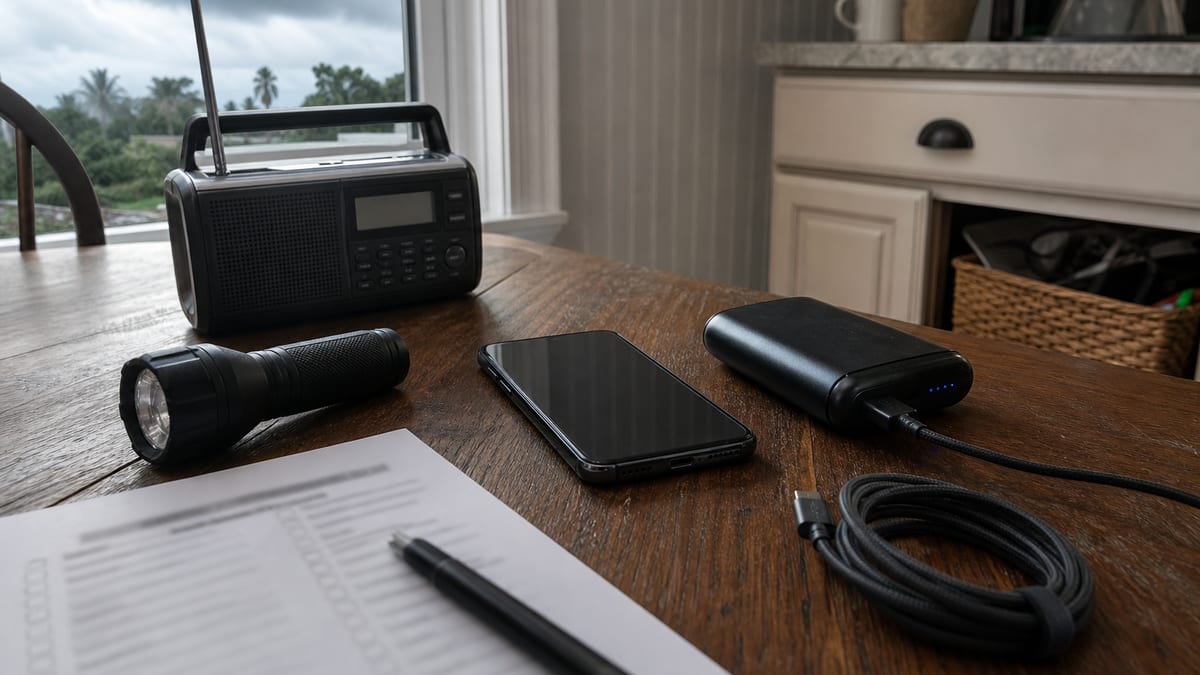
Hurricane season starts June 1, and your phone is usually the first tool you reach for when the power or home internet goes sideways. The catch: carrier backup systems help, but they do not replace a charged phone, offline information, and a simple family check-in plan.
NOAA's Climate Prediction Center says the 2026 North Atlantic hurricane season outlook calls for 8 to 14 named storms, 3 to 6 hurricanes, and 1 to 3 major hurricanes. Even a quieter-than-average season can knock out local power, congest networks, and turn a normal phone plan into your emergency lifeline.
Hurricane season phone prep starts before the first warning
NOAA says the North Atlantic hurricane season officially runs from June 1 through November 30. Its May 21 outlook gives a 55% chance of a below-normal season, a 35% chance of a near-normal season, and a 10% chance of an above-normal season.
That forecast should not make phone prep feel optional. A below-normal season can still include local outages, evacuation routes, school closures, and multi-day power problems.
What this means for you: set up the phone basics now, before a named storm is pointed at your county and everyone is trying to download the same weather app.
Carrier backup tools are improving, but they are not magic
T-Mobile said on May 5 that it is preparing for hurricane and wildfire season with AI-powered network intelligence, satellite connectivity, and advanced emergency response capabilities. The company also listed rapid-deploy cell sites, hybrid portable generators, portable satellite kits, and community support teams that can provide Wi-Fi, charging, and other resources at shelters and impacted areas.
Verizon's storm-prep guidance makes the same practical point from the household side: a smartphone can act as a weather radio, flashlight, camera, map, and family contact tool, but only if it is charged and ready before the storm.
What this means for you: do not assume your carrier's disaster trucks or satellite tools will be available on your block. They are a backup layer, not your whole plan.
Charge first, then reduce what drains the battery
Ready.gov tells households to keep cell phones charged when a hurricane is in the forecast and to buy backup charging devices for electronics. Verizon recommends charging phones, battery packs, and kids' devices before the storm, then conserving power during and after the event.
That means the cheapest emergency upgrade may not be a new wireless plan. It may be a reliable power bank, a wall charger that actually fast-charges your phone, and a habit of topping off devices as soon as watches and warnings begin.
What this means for you: check every phone, watch, tablet, hotspot, and battery pack in the house. If one device is the family contact hub, give it the biggest battery reserve.
Use texts and offline maps when networks are stressed
Ready.gov says phone systems are often down or busy after a disaster and recommends using text messages or social media to communicate with family and friends. Verizon also recommends downloading offline maps and turning on emergency alerts and location settings before a storm.
Texting matters because it often needs less network capacity than voice or video. Offline maps matter because navigation can fail when home Wi-Fi is out, towers are congested, or you are trying to move through an evacuation route.
What this means for you: agree on a short check-in text before the storm, such as "safe at home" or "leaving now." Save voice calls for real emergencies.
The SaveOnPhone read
- Coverage still matters: if your area loses power often, compare carriers by real local reliability, not only monthly price.
- Backup power beats panic upgrades: a $25 to $60 power bank may help more than switching plans during storm week.
- Hotspot is not guaranteed rescue: phone hotspot can help if cellular service holds, but it will not fix a tower outage or a dead battery.
- Family plans need a storm owner: one person should keep the shared checklist, charging gear, and emergency contacts current.
What to do this week
- Charge and test every portable battery pack in the house.
- Download offline maps for home, work, school, and evacuation routes.
- Turn on wireless emergency alerts and location sharing for family members who want it.
- Write one group-text check-in plan and save an out-of-area contact.
- Compare your carrier's local coverage against a backup option if outages are common where you live.
Bottom line: carriers are investing in tougher networks, portable generators, and satellite backup, but your bill does not automatically buy a working phone in every storm. Charge early, keep messages simple, save maps offline, and treat your phone plan as one piece of a bigger household emergency plan.