








Something big is happening in dead-zone coverage: satellite-to-phone service is moving from emergency promise to real shopping consideration. But it is not a blank check to cancel common-sense backup plans.
T-Mobile's T-Satellite page says the service supports texting and select satellite-ready apps with a compatible device in most outdoor areas in the U.S. where you can see the sky. That is useful context if you hike, drive rural roads, or live where one carrier's map still has holes.
T-Mobile satellite service starts with device compatibility
The first check is simple: your phone has to be compatible. T-Mobile describes T-Satellite as working with a compatible device, so shoppers should not assume every older phone on the account will get the same backup connection.
What this means for you: before you pay extra or treat satellite as a safety feature, check the exact phone model on each line. A family plan with one newer phone and three older phones may not get equal backup value.
The sky-view rule matters more than the marketing
T-Mobile says the service is for most outdoor areas in the U.S. where you can see the sky. That wording matters. A phone in a basement, dense building, parking garage, or forested ravine may not behave like a phone on an open roadside.
That does not make the service useless. It makes it a backup tool with conditions. If your real risk is a commute through rural gaps, an outdoor trail, or storm cleanup outside the house, the fit is stronger than if you mainly need indoor coverage.
What this means for you: think about where you actually lose service. If the dead zone is indoors, a better Wi-Fi calling setup or a different network may still matter more.
Texting is the headline feature, not full phone replacement
T-Mobile's page describes texting and select satellite-ready apps. That is not the same as promising a normal cellular experience with calls, streaming, hotspot, and every app working the way they do on 5G.
The practical use case is narrower: getting a message out, receiving key texts, or using supported apps when regular coverage drops. For bill comparison, that means the feature has value, but it should not outweigh a lower monthly price if you rarely leave regular coverage.
What this means for you: ask which apps are supported, what counts as satellite-ready, and whether your must-have communication method works before you switch.
Emergency texting still has caveats
T-Mobile says satellite service, including text to 911, may be delayed, limited, or unavailable. That sentence should stay in your head. Satellite backup can improve your odds in a weak-coverage area, but it is not a guaranteed emergency line.
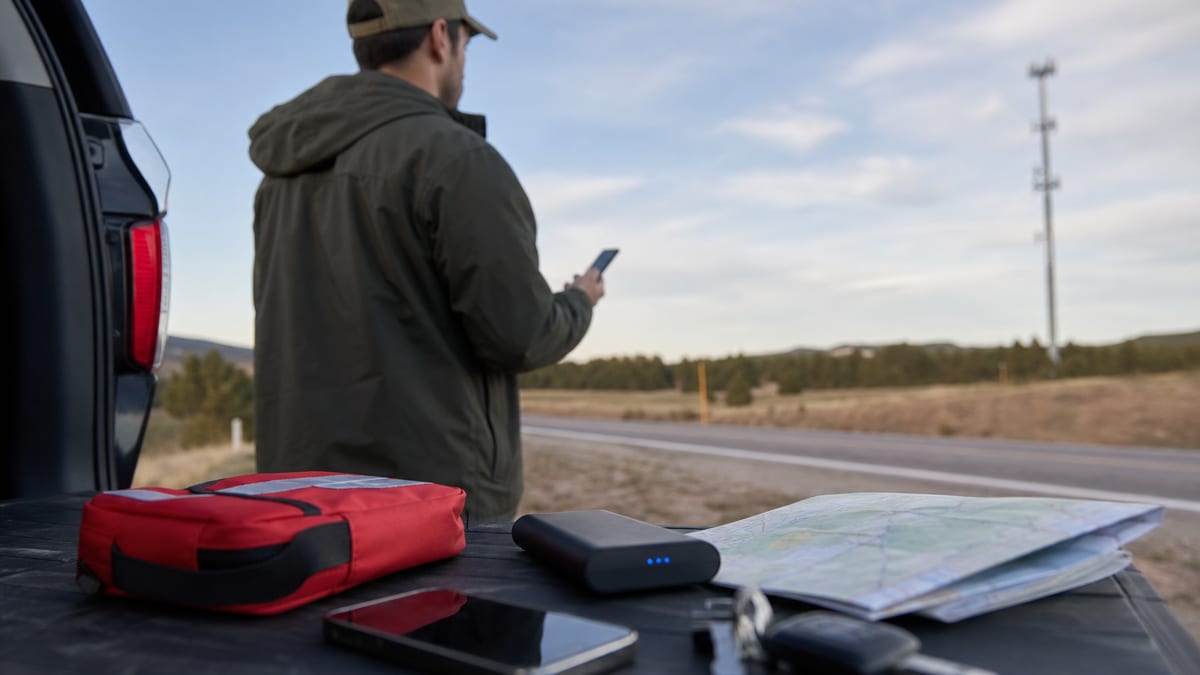
For storm season, rural travel, and trail days, keep the boring backups: charge the phone, carry a power bank, download offline maps, share your route, and know where regular coverage usually returns.
What this means for you: treat satellite as one layer, not the entire safety plan.
The monthly cost depends on your plan
T-Mobile says T-Satellite is included with Experience Beyond and Better Value plans or costs $10 per month, auto-renewing monthly, with cancellation available in the T-Life app. That makes the value calculation different for two shoppers.
If the feature is already included on a plan you were going to buy anyway, it can be a useful extra. If you are upgrading plans or adding $10 per month only for satellite texting, compare that against an MVNO on the same network plus a separate safety device or a second-line strategy.
The SaveOnPhone read
- Do not buy the slogan: satellite backup is helpful only if your phone, location, and supported services line up.
- Put a dollar number on it: $10 per month is $120 per year before taxes or any plan upgrade needed to make it feel included.
- Coverage gaps are still personal: the best carrier is the one that works where you live, drive, work, and travel.
- Emergency value is real but limited: delayed or unavailable 911 texting is still a caveat, not a footnote.
What to do this week
- Check whether every phone on your account is satellite-compatible.
- List the places where you lose service and whether they have open sky.
- Ask which satellite-ready apps are supported on your phone.
- Compare the included-plan price against the $10 monthly add-on path.
- Keep a power bank and offline maps in your travel or storm kit.
Bottom line: T-Mobile satellite service can be a useful safety layer for outdoor dead zones, but it should not distract you from the full monthly bill, device limits, and the coverage you need every normal day.