








Let's cut through the corporate-goodwill haze on this one: T-Mobile says its Hometown Grants program has now funded 500 community projects. That's useful context for small-town coverage conversations, but it is not a coupon, a coverage guarantee, or a reason to ignore your monthly bill.
The company announced on June 25, 2026, that the final 26 grant recipients closed out a five-year, $22.8 million program that started in April 2021. T-Mobile says the program reached small towns and rural communities across 49 states and Puerto Rico.
T-Mobile Hometown Grants reached 500 communities
T-Mobile says Hometown Grants helped fund 500 community development projects, positively impacted 4.2 million people, helped create more than 2,770 jobs, and generated nearly $125 million in matching funds. The final round drew more than 2,000 applications, and the company awarded 26 grants.
What this means for you: the carrier is clearly trying to build goodwill in rural and small-town markets. Fine. But goodwill does not tell you whether your kitchen, commute, school pickup line, or basement actually has reliable service.
Do not confuse community investment with coverage proof
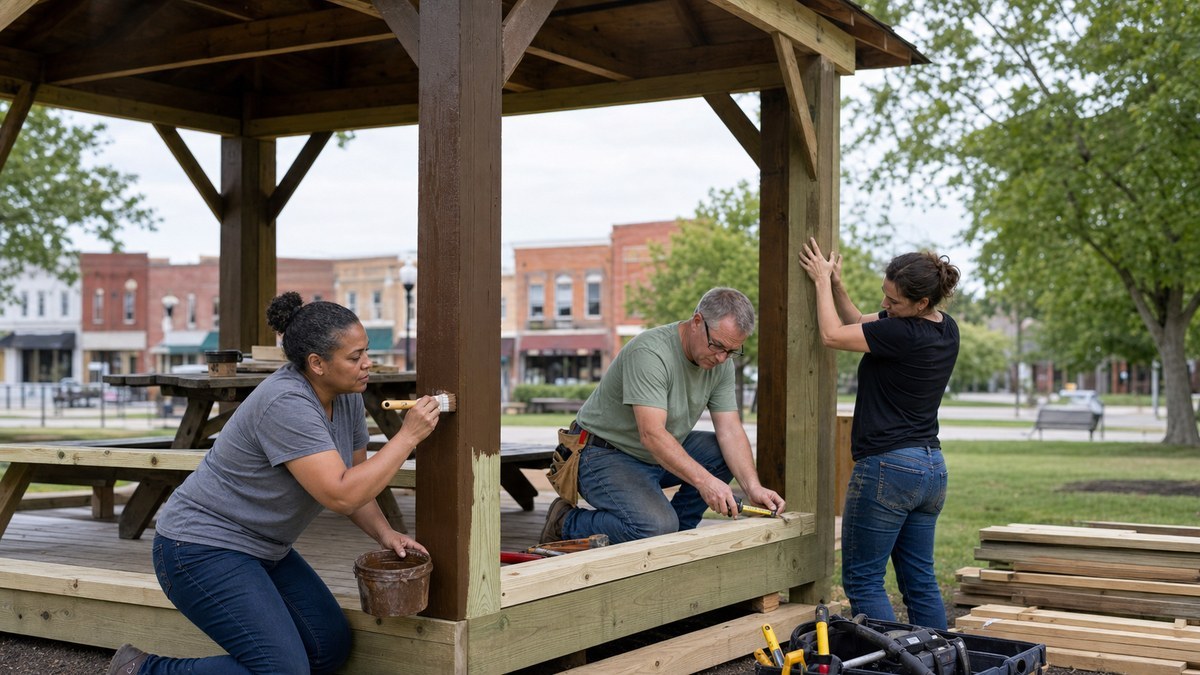
The final grant list is about local projects, not tower-by-tower wireless performance. It includes playgrounds, downtown gathering spaces, digital learning hubs, public Wi-Fi projects, STEM spaces, theater upgrades, and other community improvements.
What to do: test service where you live before switching. Check your address, ask neighbors on the same network, and if you can, try a short-term line or trial before moving the whole family plan. A press release cannot replace a signal test at your house.
Rural shoppers should separate broadband from wireless
T-Mobile's announcement also points to Home Internet, Business Internet, Fiber, and T-Satellite with Starlink as part of its broader small-town connectivity pitch. Those are different products with different limits, equipment rules, addresses, and availability checks.
What to do: do not assume one T-Mobile product proves the other one works for you. A solid phone plan does not automatically mean home internet will be fast at your address, and a home internet offer does not automatically mean every phone line in the family will get the coverage you need.
The bill still decides whether switching is worth it
Here we go again with the part marketing departments prefer to soften: the monthly number matters more than the mood music. If you are comparing T-Mobile, Metro by T-Mobile, Mint Mobile, or another carrier, the fair comparison is the recurring cost after taxes, fees, autopay rules, device payments, and promotion deadlines.
What to do: price the second bill, not the launch offer. Write down the plan cost, device cost, taxes and fees, any streaming or travel perk you will actually use, and the date a discount ends. If the math only works because of a gift card or short-term credit, stay skeptical.
The SaveOnPhone read
- The news is real: T-Mobile says Hometown Grants ended after 500 funded community projects and more than $22.8 million invested.
- The switch case is separate: community grants do not prove coverage, data priority, hotspot performance, or home internet reliability at your address.
- Small-town shoppers need a local test: your town can be in a carrier's marketing story while your home still sits in a weak-signal pocket.
- Total monthly cost wins: compare the carrier's full recurring bill against MVNO options on the same network before you move lines.
What to do this week
- Check T-Mobile's coverage and home internet availability for your exact address, not just your ZIP code.
- Ask one or two local customers how service performs indoors and during commute hours.
- Compare T-Mobile postpaid pricing with Metro, Mint, and other MVNO options before signing a device deal.
- Separate phone-plan value from home internet value; each product needs its own test.
- Keep a copy of every promotion deadline, autopay rule, and device-payment term before you switch.
Bottom line: T-Mobile's small-town grant milestone is a legitimate community story. It is not a free pass for your phone bill. Treat it as background, then make the decision the boring way: coverage where you actually live, total monthly cost, and terms you can live with after the promotion fades.