








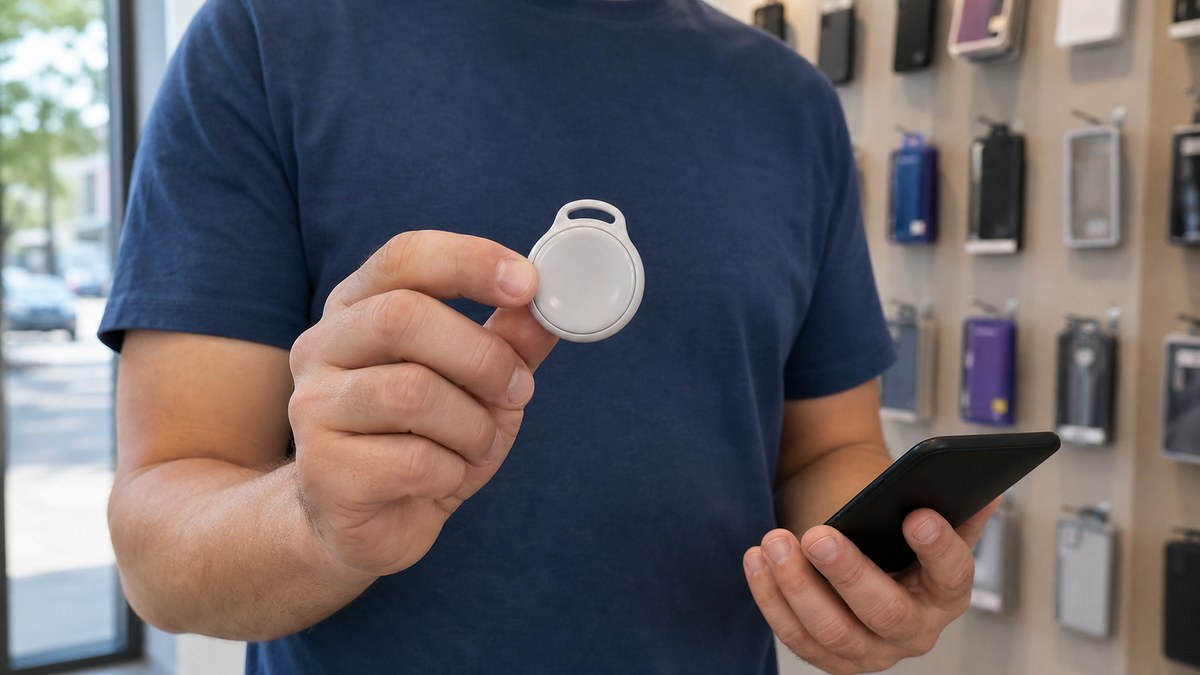
Google appears ready to put its own name on a Bluetooth item tracker, potentially giving Android users a first-party alternative to Apple’s AirTag. Recent leaks identify the device as the Google Pixel Tag and depict a small tracker intended for keys, bags and other belongings.
The development matters because Google already supplies the network behind compatible Android trackers, but it does not currently sell its own tag. A Google-made model could make the category easier to understand for Pixel owners while putting more pressure on existing Find Hub tracker makers. It could also give shoppers a clearer answer to a question Apple settled years ago: which tracker is designed to work most closely with the phone and location network they already use?
Google has not formally announced the Pixel Tag, so its specifications, price and release date should still be treated as unconfirmed. The strongest evidence comes from leaked product material rather than a retail launch or an official technical document.
What the Pixel Tag leak shows
Tech Advisor reported that the Pixel Tag could debut alongside Google’s next Pixel devices. The apparent tracker follows earlier hints found in prematurely published retail material, suggesting that this is more than an abandoned internal experiment.
Netzwelt’s report on the retail leak said the material connected the Pixel Tag with Google’s Pixel 11 launch cycle. The publication cautioned that older rumors about the tracker’s technical capabilities may no longer be reliable. That distinction is important: evidence that a product exists does not automatically verify every previously rumored feature.
The basic proposition is straightforward. A tag attached to a bag or key ring broadcasts a short-range Bluetooth signal. Nearby Android devices participating in Google’s location network can detect that signal and securely relay an approximate location to the tag’s owner. This crowdsourced approach is what allows a tracker to be found beyond the Bluetooth range of its owner’s handset.
Google now calls its device-location service Find Hub. A first-party tag would give the company direct control over both the tracker and the network experience, much as Apple controls AirTag and the Find My network. That integration could reduce setup friction and make troubleshooting less dependent on the policies or companion apps of another hardware company.
The missing details will determine its value
The leaks do not yet provide enough verified information to judge whether the Pixel Tag will outperform established Android-compatible trackers. Buyers should wait for Google to confirm several practical details, including price, battery type, water resistance, speaker volume and the Android versions required for setup.
Precision finding is another major unknown. Ultra-wideband technology can provide more specific distance and direction guidance than Bluetooth alone, but both the tracker and the handset must contain compatible hardware. Even if the Pixel Tag supports that capability, the experience may vary across Android phones. Google will need to explain whether precise directions work only with selected Pixel models or extend to other manufacturers’ devices.
Network settings matter as well. A crowdsourced tracker is only as useful as the network of nearby devices willing and able to detect it. Google has adjusted its location-network behavior over time while balancing finding performance against protections designed to prevent unwanted tracking. Marketing claims about broad Android reach should therefore be judged against real-world recovery tests, not the theoretical number of Android phones in circulation.
Anti-stalking safeguards are essential, not optional. Google and Apple have worked on cross-platform warnings for unknown trackers traveling with someone, but a Pixel-branded tag would put additional responsibility on Google to make alerts timely and understandable. The company should also explain how quickly a separated tag begins making a sound and how a person without the owner’s phone can disable it.
Practical impact for wireless customers
A Pixel Tag should not require a new cellular line if it operates like conventional Bluetooth crowdsourced trackers. That means buyers would not normally add it to a carrier plan or pay a monthly wireless fee. It would rely on nearby participating devices to report its location rather than containing its own full cellular connection.
That distinction separates an item tag from GPS trackers marketed for pets, vehicles or remote travel. Cellular trackers can report from places without nearby compatible phones, but they commonly carry service fees. A Bluetooth tag is better suited to finding luggage, keys or a bag in populated areas; it is not a substitute for continuous cellular GPS tracking or an emergency locator.
Pixel owners considering a phone upgrade should also avoid assuming that every current handset will support every advertised locating feature. If Google reserves directional finding for phones with particular hardware, model compatibility could matter more than carrier coverage. Until the company publishes its requirements, buying or upgrading specifically for the leaked accessory would be premature.
The Pixel Tag could still be a useful addition to Android’s accessory ecosystem. A recognizable first-party option may encourage more people to enable Find Hub and could improve competition with Apple’s mature tracker network. For now, however, the leak establishes an apparent product—not its price, performance or superiority. Those are the details worth waiting for.