








SpaceX says it expects to begin offering Starlink Mobile service near the end of 2027, setting a tentative date for its push beyond satellite dead-zone coverage and into direct competition with national wireless carriers.
The company provided the timeline during its August 4 quarterly earnings call, the first public call promoted through SpaceX’s investor-relations site. President and Chief Operating Officer Gwynne Shotwell said SpaceX expects to start launching the required satellites next year and begin service late in the year, according to TechRadar’s account of the call.
That is more ambitious than using satellites only as a backup when a customer leaves tower coverage. SpaceX is describing Starlink Mobile as a service that could win subscribers from AT&T, T-Mobile and Verizon. Shotwell told investors that she expects the company to capture customers because SpaceX believes its service will be better. It has not yet supplied the pricing, plan allowances or coverage maps needed to test that claim.
A hybrid network, not a tower-free replacement
Starlink Mobile’s proposed network would combine satellites with terrestrial cellular equipment. Satellite links are valuable in rural areas and other places where building towers is difficult, but they do not automatically provide the capacity needed for millions of customers in cities. Buildings, terrain and indoor use also make a satellite-only connection a poor substitute for dense ground coverage.
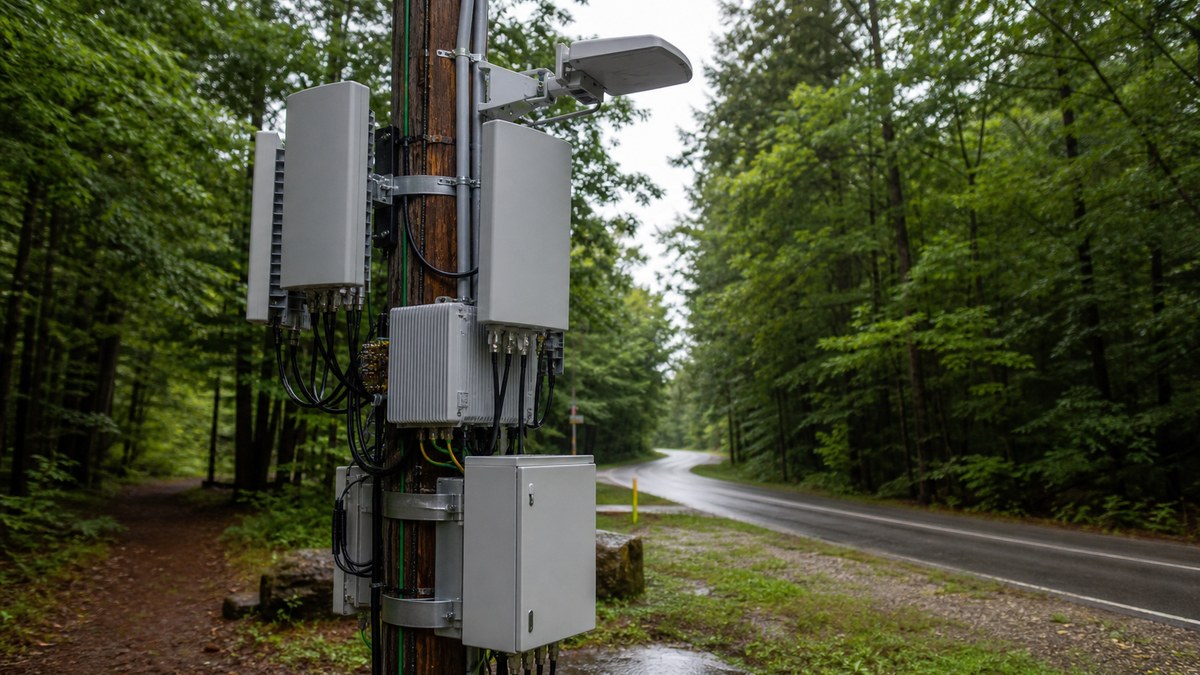
SpaceX has discussed mounting cellular base-station equipment alongside some Starlink ground installations. In principle, that would let the company use ground radios where demand is concentrated and satellites where towers cannot economically reach. The result would resemble a conventional cellular network with an unusually large satellite layer, rather than every call and data session traveling directly through space.
The company has acquired an important piece of that plan. EchoStar’s agreement with SpaceX covers AWS-4 and H Block spectrum licenses and includes a long-term arrangement giving Boost Mobile subscribers access to a future generation of Starlink Direct to Cell service. EchoStar valued the spectrum transaction at about $17 billion, split between cash and SpaceX stock, with additional cash interest payments on EchoStar debt.
Owning licensed spectrum gives SpaceX more independence than a basic mobile virtual network operator. An MVNO buys access to another carrier’s towers, leaving the host network in control of wholesale terms and much of the underlying coverage. Spectrum ownership permits SpaceX to build and control part of its own radio network, although licenses alone do not create tower sites, indoor coverage or enough capacity for a nationwide launch.
The 2027 date depends on unfinished infrastructure
SpaceX tied the mobile rollout to its next generation of Starlink satellites. The company says each V3 satellite will provide substantially more capacity and support many more simultaneous connections than the current generation. Those spacecraft are also designed around Starship launches, making the schedule dependent on a rocket program that still must demonstrate frequent operational deployment.
This matters because a mobile carrier cannot sell nationwide plans on executive confidence alone. It needs enough satellites and terrestrial radios to handle busy-hour traffic, agreements for roaming or partner coverage where its own network falls short, device support, customer service and billing systems. SpaceX has not publicly detailed how those pieces will fit together at launch.
The relationship with existing carriers is another open question. Starlink currently supplies satellite connectivity through carrier partnerships, including services intended to fill terrestrial dead zones. A retail Starlink Mobile plan would put SpaceX in competition with companies that could otherwise provide terrestrial access. That tension may affect whether the service launches with broad roaming coverage or begins as a more limited satellite-centered product.
What wireless customers should watch
Consumers do not need to delay a plan change for a service that remains at least a year away. The useful comparison will begin only when SpaceX publishes the monthly price, taxes and fees, high-speed data allowance, hotspot policy, indoor-coverage expectations and the list of supported devices.
The most consequential question is whether Starlink Mobile becomes a full everyday replacement or a specialized plan for people who regularly travel beyond tower coverage. A competitively priced hybrid network could pressure carrier rates and improve rural options. A service with limited ground coverage, strict data limits or expensive hardware would instead compete mainly as a coverage supplement. SpaceX has now put late 2027 on the calendar; the plan details will determine whether that date represents a national wireless launch or the first stage of a much longer buildout.