








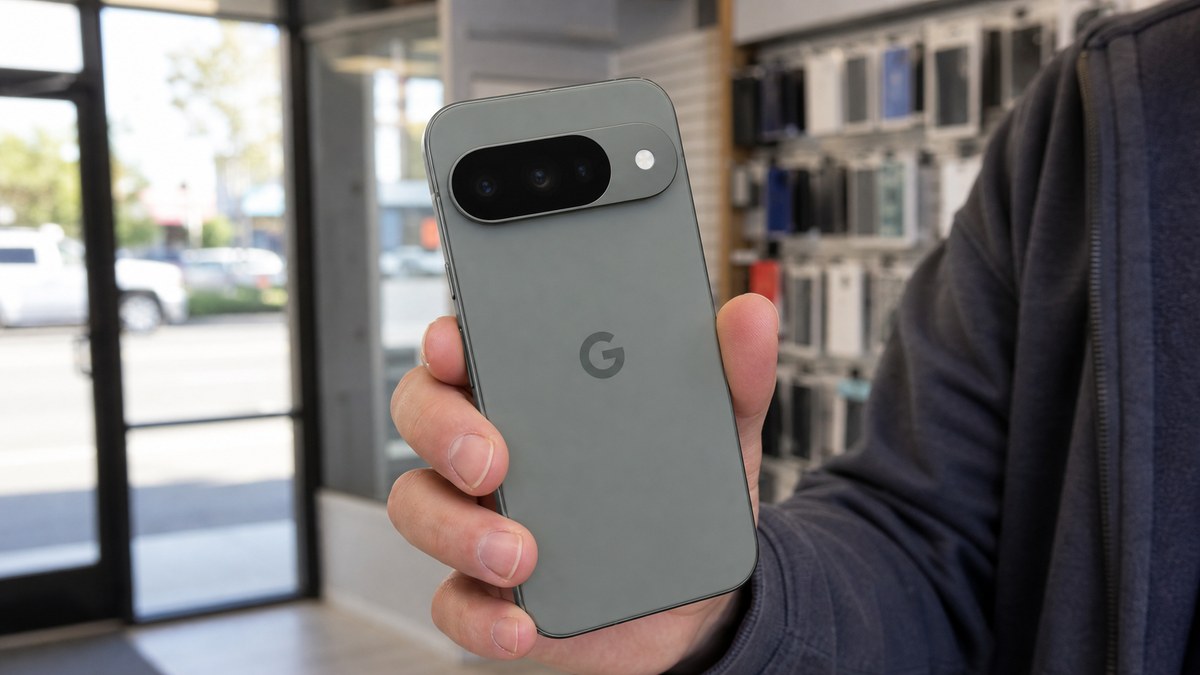
Google has raised the cost of entering its flagship phone lineup. The new Pixel 11 starts at $899 in the United States, $100 above the Pixel 10’s launch price, and the former 128GB entry configuration is gone. In its place, Google now starts every Pixel 11 model with 256GB of storage.
The storage increase gives buyers something tangible for the higher price, but it also removes the less expensive choice for people who keep most photos in the cloud or simply do not need 256GB. Google opened preorders on August 12, putting that trade-off in front of shoppers before the phones reach stores.
Google’s Pixel 11 announcement says the standard model, Pixel 11 Pro and Pixel 11 Pro XL all begin at 256GB. The company also promises seven years of operating-system, security and Pixel Drop updates from launch. That support window makes the phones viable for long ownership, although software longevity does not guarantee that a battery or other hardware will last seven years without service.
The whole Pixel range moved up by $100
The price increase is not confined to the base phone. According to independent reporting from The Associated Press, the Pixel 11 Pro starts at $1,099 and the Pixel 11 Pro XL at $1,299. The Pixel 11 Pro Fold begins at $1,899. Each is $100 more than its corresponding model last year.
That means Google has shifted the entire family upward rather than using a single premium model to absorb the increase. The standard Pixel 11 is still the least expensive route into the new hardware, but its $899 price places it closer to the premium tier occupied by Pro-branded devices from other manufacturers.
The clearest hardware change on the standard model is a larger 48-megapixel main camera sensor. Google says it offers 56% greater light sensitivity than the Pixel 10 sensor. A 5x telephoto camera supports up to 30x digital zoom, while the redesigned glass camera bar is 40% thinner than those on earlier base-model Pixels.
All three conventional Pixel 11 phones use Google’s new Tensor G6 processor. Google claims 25% faster web browsing and 15% quicker app launches compared with Tensor G5, based on internal testing with preproduction hardware. Those figures are useful indicators, not independent performance results, so buyers should wait for production-device testing before treating them as everyday speed gains.
The Pro models receive an upgraded 48-megapixel telephoto camera and zoom extending to 120x. Their new HiLight feature uses colored LEDs around the camera flash to show when Gemini is processing a request or when a selected contact calls. Google says additional notification functions are planned, but it has not committed to a schedule for them.
Storage is the real entry-price story
Doubling storage can matter for people who record substantial video, download large games or keep media offline. It is less persuasive for buyers who previously chose 128GB because they wanted the lowest unlocked price. Those shoppers cannot configure a cheaper Pixel 11; their options are to pay $899, look for a discount on the prior generation or accept a carrier promotion with its own conditions.
The seven-year update promise also changes the value calculation. Spread across several years, a $100 increase is modest. Yet many carrier offers recover a phone subsidy through monthly bill credits, commonly requiring the customer to keep an eligible plan and line active. A long software-support period is most valuable when the buyer retains the freedom to change carriers, so a deep promotional discount should be weighed against any multi-year service commitment.
Google is bundling six months of Google AI Pro with eligible Pixel 11 Pro purchases. That is a temporary subscription benefit rather than a permanent phone feature. Buyers who activate it should check the renewal price and cancellation terms in their market, because the subscription can begin billing after the trial unless canceled.
What buyers should consider
Anyone who needs 256GB and planned to keep the phone for several years gets a straightforward upgrade: more base storage, newer cameras, faster charging and a long update policy. People primarily attracted by an advertised “free” carrier Pixel should inspect the required plan, trade-in rules and bill-credit period before ordering. The important comparison is not $899 against zero; it is the unlocked price against the full service cost and lost credits if the line is canceled early.
For lighter users, the eliminated 128GB model is the decisive change. Waiting for an unlocked sale or comparing the discounted Pixel 10 may preserve carrier flexibility without paying for storage that will go unused.