








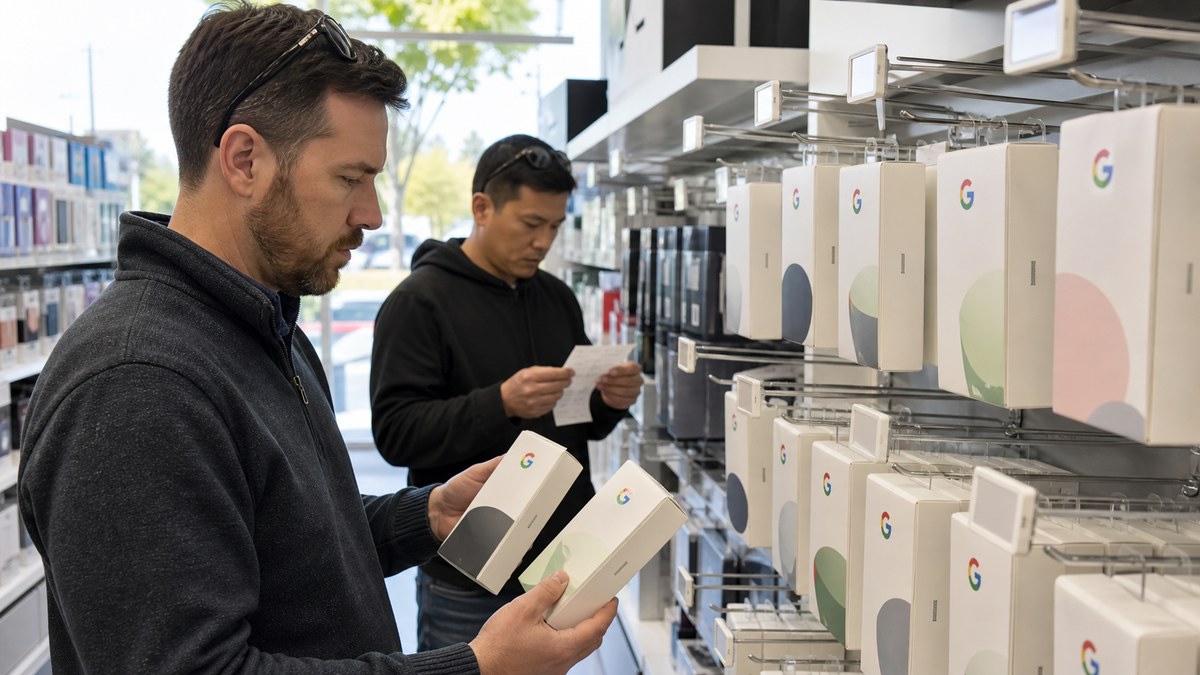
Pixel 11 arrives with a higher cost of entry
Google opened Pixel 11 preorders this week, but the base model now starts at $899 and ships with 256GB of storage rather than offering a cheaper 128GB configuration. Ars Technica’s launch report says the phones are scheduled to ship August 20 and describes a lineup built around modest hardware revisions, faster magnetic wireless charging and more Gemini-powered software.
The storage increase partly explains the price, but it does not help shoppers who would have preferred less capacity and a lower bill. Carrier promotions may hide the increase behind monthly credits, typically requiring an eligible plan, a qualifying trade-in or both. Those conditions make the full service commitment more important than the advertised phone payment. Buying unlocked preserves more freedom to switch plans, although it leaves the customer responsible for the larger upfront price.
Google puts more of the upgrade case in Gemini
The Pixel 11’s most consequential changes may come from software rather than its exterior. 9to5Google’s account of the new Gemini Intelligence features describes task automation across more than 40 apps, location-aware information in At a Glance and a Gboard tool called Rambler. Rambler turns loosely spoken thoughts into edited text instead of simply transcribing every word.
These features give Google a clearer way to distinguish Pixel phones without relying on dramatic annual hardware changes. They also complicate the upgrade calculation. Software-based improvements can be genuinely useful, but buyers should determine which ones are exclusive to Pixel 11 hardware, which require cloud processing or an account, and which could eventually reach older Pixels. An impressive demonstration does not establish that a feature will work equally well across every app or daily routine.
The broader Google hardware lineup favors ecosystem buyers
Google did not launch the Pixel 11 in isolation. Its announcements also covered the Pixel 11 Pro, Pro XL and Pro Fold, the Pixel Watch 5, the Pixel Tag tracker and updated accessories. 9to5Google’s launch roundup reports that the 6.3-inch Pixel 11 Pro starts at $1,099, while the larger Pro XL begins at $1,299. The Pro models add a rear notification feature called HiLight, and the standard Pixel 11 gains faster Qi2.2 charging.
That breadth matters because Google is selling a connected package, not merely four phones. A watch, tracker and magnetic accessories can make staying with one device family more convenient, but they also raise the practical cost of changing platforms later. Shoppers comparing carrier bundles should separate the value of each included device from the length and terms of the phone credits. A free watch is less compelling if it requires another cellular line or nudges the total monthly charge upward.
AT&T extends price increases to another group of accounts
Some AT&T customers are encountering a less visible change on their August bills. An AT&T support notice says accounts that avoided an earlier April increase may now receive the adjustment if affected lines were activated or moved to an eligible plan between July 24 and November 1, 2025. The carrier directs customers to their bill’s news and offers area for account-specific details.
The narrow eligibility window makes this difficult to evaluate from a plan name alone. Two customers who appear to have the same service could see the change at different times because their lines were established on different dates. The useful comparison is the new total for every line, feature and discount, not just the stated increase. Customers paying more should also verify whether switching plans would change hotspot data, video treatment, device credits, taxes or included perks before accepting an apparently cheaper alternative.
AO enters the UK market with a single large-data plan
British electronics retailer AO launched AO Mobile as a Vodafone-powered virtual operator. Telecoms.com reports that its sole 30-day plan includes 500GB of data, unlimited UK calls and texts, and 15GB of EU roaming. It costs £12 per month for AO members and £18 for nonmembers; membership itself costs £39.99 annually. Customers can choose a physical SIM or eSIM and place as many as nine additional SIMs on the account.
The member rate deserves annual math rather than a glance at the monthly figure. A customer buying membership only for mobile service would effectively add about £3.33 per month, leaving a meaningful discount but not the full £6 difference shown between the two rates. The plan’s rolling term reduces contract risk, while the unusually large allowance will exceed what many people need. AO’s launch also illustrates how retailers can use wholesale network access to compete on packaging and account relationships without building radio infrastructure.
Android 16 moves into connected equipment beyond phones
Quectel has begun bringing Android 16 to cellular smart modules used inside connected products. Its SH602FA product documentation identifies an LTE Cat 4 module with Android 16, Wi-Fi, Bluetooth, satellite positioning support and maximum cellular rates of 150Mbps downstream and 50Mbps upstream. Quectel positions the hardware for industrial and consumer devices that need displays, cameras or other multimedia functions.
This is not a new phone plan, and consumers will rarely shop for the module itself. The change matters further down the supply chain: payment terminals, security equipment and specialized handheld devices can receive a newer Android base while using established LTE networks. Cat 4 performance is adequate for many such jobs without requiring 5G hardware. The unanswered question is how long individual equipment makers will provide security and operating-system updates after incorporating the module, because a current Android version at launch does not guarantee a long supported life.