








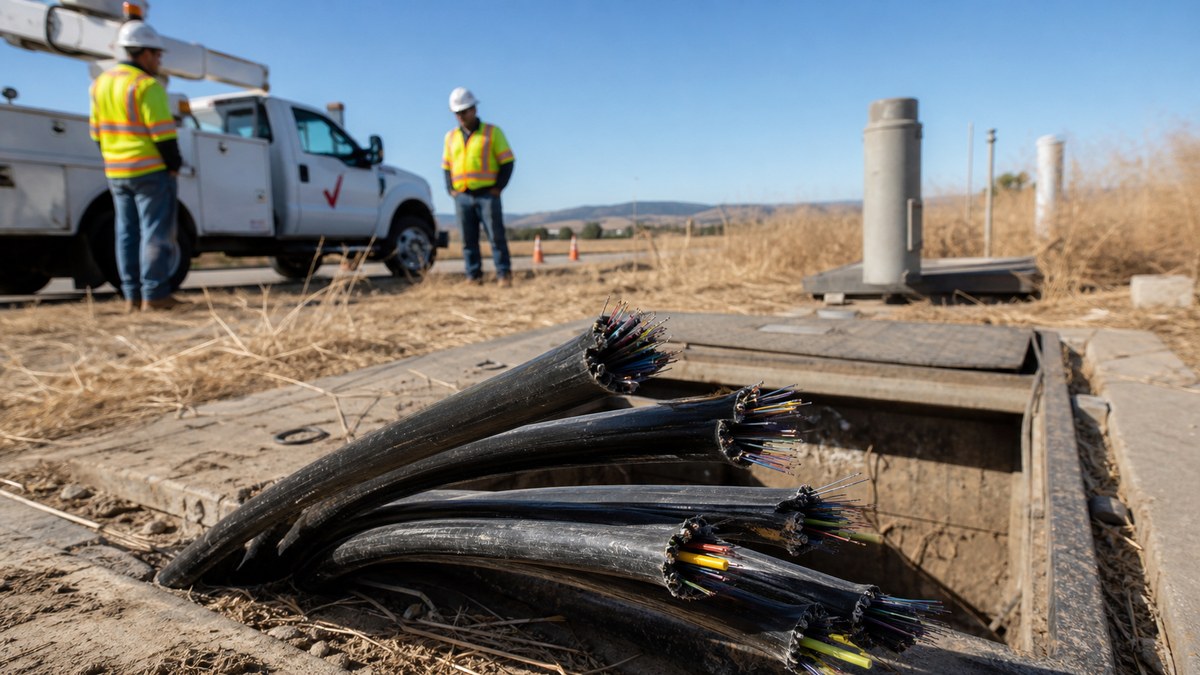
Verizon is offering $25,000 for information that leads to the arrest and conviction of people responsible for cutting fiber cables after a string of attacks disrupted wireless and internet service in Los Angeles and other parts of Southern California.
The carrier announced the reward after vandals severed multiple cables over several days, interrupting connections for thousands of customers. Verizon did not identify the damaged locations, disclose how many cables were cut or say whether investigators had established a motive.
The company’s August 11 announcement says the reward applies to information about people who intentionally damage Verizon equipment. It directs witnesses to call 911 first and then contact Verizon Security at 1-800-997-3287. The company says its network and security teams are working with law enforcement.
The development matters beyond the affected neighborhoods because fiber is part of the less-visible infrastructure behind mobile service. A cell site may provide the radio connection customers recognize as LTE or 5G, but that traffic still needs a path back into the carrier’s wider network. Fiber commonly provides that backhaul. Cutting it can isolate sites even when their antennas, radios and electrical systems remain operational.
The outage extended beyond home internet
Verizon said the recent damage cut off both wireless and wireline communications. That distinction is important for households that treat a cellular plan as a backup for fixed broadband, or use Verizon mobile service and Verizon home internet at the same address. If both connections depend on affected infrastructure, switching from Wi-Fi to cellular data may not restore service.
SDxCentral reported that the Southern California disruption lasted multiple hours and affected thousands of Verizon customers. It cited published outage reports indicating that more than 12,000 customers reported losing service over the weekend before access was restored Sunday evening. Outage-report totals are useful evidence of scale, but they are not the same as a carrier-confirmed count of affected accounts.
The outage also illustrates why a localized cable cut can produce a wider and less predictable coverage problem. Network routes, shared transport facilities and the availability of alternate paths determine which sites remain connected. Customers may therefore see service disappear in one area while nearby locations continue operating normally. Verizon has not released enough technical detail about these incidents to determine whether redundant routes failed, were unavailable or simply could not absorb all affected traffic.
Verizon framed the attacks as a public-safety threat because damaged communications links can interrupt access used by emergency services, healthcare providers and residents trying to reach 911. The carrier said recent incidents are under active investigation. No arrest was announced with the reward offer.
Cable theft has become a broader network problem
Although fiber itself has little resale value, thieves sometimes cut telecommunications lines while searching for copper or damage fiber placed alongside older copper facilities. Verizon’s announcement attributes the Southern California interruption to intentional vandalism but does not say whether copper theft was the suspected objective.
The carrier says network theft and vandalism have increased around the country and that California and Texas account for more than half of reported incidents. That figure covers a broader collection of incidents, not solely the cables involved in the latest outage. It also does not establish how frequently vandalism causes a major wireless disruption compared with software failures, power loss, construction damage or severe weather.
The $25,000 offer is an enforcement tactic rather than a network upgrade. It may help investigators obtain information, but it does not by itself add alternate fiber routes or make damaged lines faster to repair. Verizon has not announced a customer credit tied to this Southern California outage, nor has it described additional physical protections or redundancy measures associated with the reward program.
What affected customers should do
Customers who experienced the interruption should preserve screenshots of Verizon’s network-status notices, support chats and the times service was unavailable. Those records can support a request for an account adjustment, although the carrier has not promised automatic credits. Because wireless and home internet can share backhaul, a backup connection on a different carrier or provider offers more protection than two services using the same network.
The practical question is not whether one carrier can prevent every cable cut. It is whether a household’s backup service fails along with its primary connection. Southern California customers comparing plans should check which underlying network each service uses, especially when reliable access is necessary for remote work, medical equipment or emergency calling.