








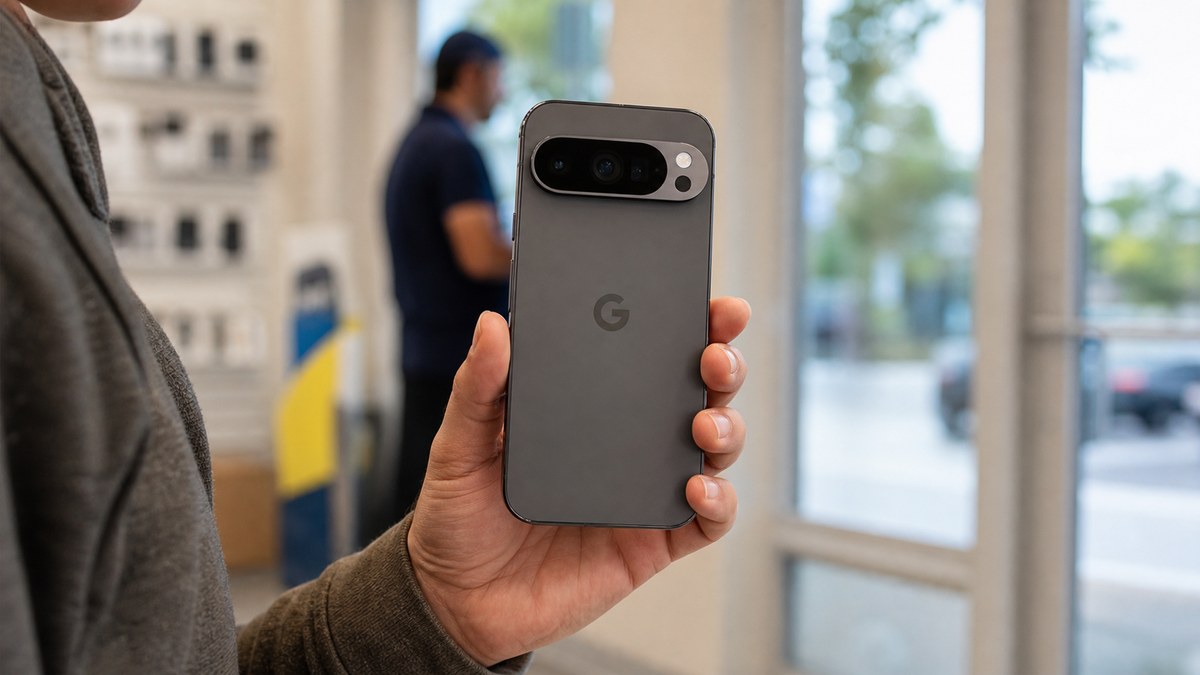
The Google Pixel 11 is now on sale, and the first detailed comparisons make the upgrade decision unusually clear: owners of last year’s Pixel 10 gain faster storage, a revised main camera and several software features, but not the kind of improvement that normally justifies replacing a one-year-old phone.
That distinction matters because Google has raised the cost of entry. The Pixel 11 starts at $899 with 256GB of storage, while the Pixel 10 launched at $799 with 128GB. This is not a direct price increase for equivalent storage—the 256GB Pixel 10 also cost $899—but shoppers can no longer choose the cheaper capacity to lower their upfront cost.
In its official Pixel 11 announcement, Google emphasizes the Tensor G6 processor, camera improvements, greater durability and more proactive Gemini features. The company began selling the Pixel 11, Pixel 11 Pro and Pixel 11 Pro XL on August 20 at starting prices of $899, $1,099 and $1,299, respectively. All three receive seven years of operating-system, security and Pixel Drop updates.
The useful changes are narrow
The base Pixel 11 has 12GB of RAM and begins with 256GB of faster Zoned UFS storage. Google lists a 4,985mAh typical battery, charging to as much as 55% in about 30 minutes with a compatible charger, and Qi2.2-certified Pixelsnap wireless charging at up to 25 watts. The phone is also lighter than its predecessor, falling from 204 grams to 197 grams.
The display, however, remains a 6.3-inch OLED panel with a 1080-by-2424 resolution, a 60-to-120Hz refresh range and peak brightness of 3,000 nits. Those figures match the Pixel 10. Buyers still do not get the more power-efficient 1-to-120Hz LTPO display reserved for the Pro models.
The camera is a more meaningful correction. Google retained the base phone’s three-camera arrangement but enlarged the 48-megapixel main sensor after criticism of the Pixel 10 camera hardware. The maximum digital zoom rises from 20x to 30x. New software includes Camera Looks, which applies adjustable visual styles while shooting, and Magic Capture, which extracts selected still images from a short video.
Those changes improve the Pixel 11 as a new purchase without transforming it into a compelling replacement for the Pixel 10. In a direct comparison, 9to5Google found that the newer storage can open some apps more quickly and that the larger main sensor gathers more light. Its testing found nearly identical battery longevity, while the screens, dimensions and general Android 17 experience remained closely matched.
Independent testing reinforces the wait-and-see case
A separate WIRED review reached a similar conclusion after testing the phone. It praised the camera, battery life, performance and 25-watt Qi2 charging, but described the generational improvement as minor. The review also noted that secure face unlocking still does not work in darkness and that the U.S. version is eSIM-only, which can complicate moving service between phones when a carrier’s transfer process does not work smoothly.
The restrained verdict is not the same as saying the Pixel 11 is a poor phone. Its faster storage addresses a weak point in the previous base model, the larger standard capacity is more practical for buyers who keep photos and video locally, and seven years of updates make it viable for a long ownership cycle. A person replacing a Pixel 7, Pixel 8 or another aging device would accumulate several generations of camera, charging, security and performance improvements at once.
The value calculation changes for Pixel 10 owners because much of what they already have remains current. The Pixel 10 is still early in its own seven-year support period, uses the same display specifications and offers comparable tested battery life. Some Pixel 11 software is initially tied to the new hardware, but launch exclusivity is a less concrete reason to spend hundreds of dollars than a failed battery, damaged screen or substantially improved modem would be.
What this means for an upgrade
Pixel 10 owners should judge carrier and retailer offers by the final amount owed, not the advertised trade-in credit. A promotion that requires a new premium unlimited plan or spreads credits across 24 or 36 months can turn a small hardware improvement into a long and expensive service commitment. Losing remaining credits after changing carriers or paying off the phone early may erase the apparent discount.
For shoppers with older phones, the Pixel 11 makes more sense as a long-term replacement, particularly if 256GB of storage was already necessary. For anyone carrying a functioning Pixel 10, the evidence supports waiting unless a trade-in reduces the net device cost to almost nothing without raising the monthly plan bill. The most valuable Pixel 11 improvement may be the option to let another year of upgrades—and another year of depreciation—pass before buying.