








Apple introduced the iPhone 18 Pro and iPhone 18 Pro Max on September 9, 2026. Apple's announcement puts U.S. preorders at 5 a.m. PT on September 12 and availability on September 18, with preorders spanning the U.S., Canada, and Mexico among more than 65 countries and regions. Starting prices are $1,199 for the Pro and $1,299 for the Pro Max.
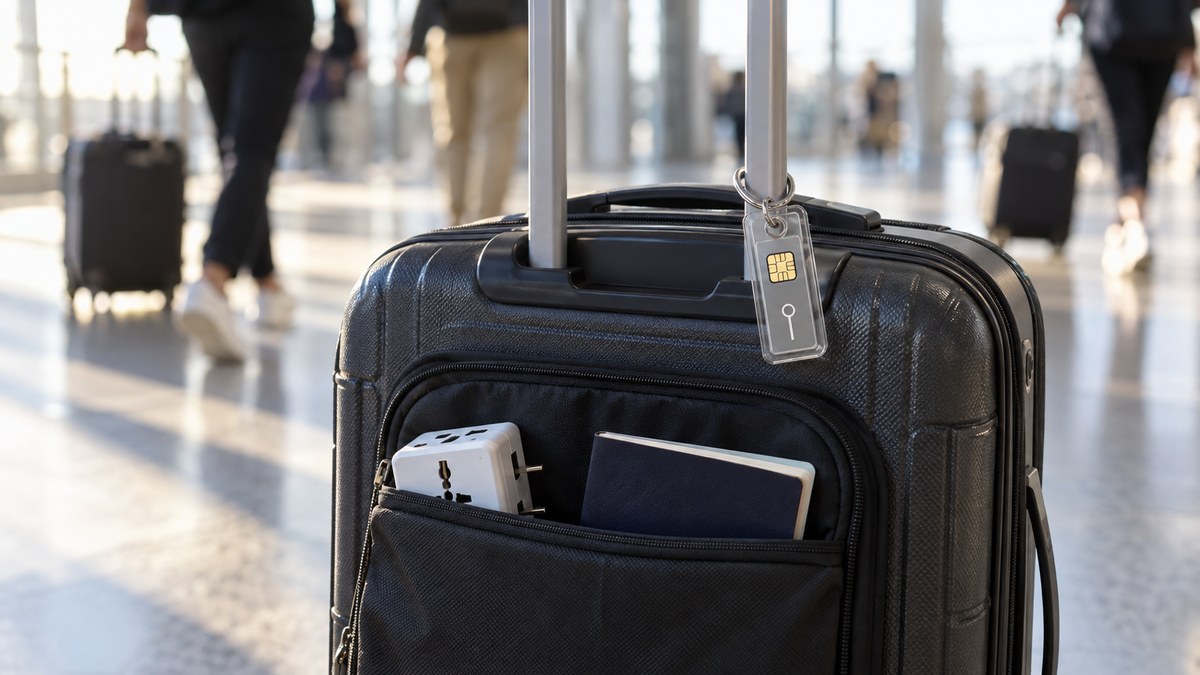
U.S. models are eSIM-only, and Apple says eSIM requires a supporting carrier and wireless service plan, naming AT&T, T-Mobile, and Verizon among supporting carriers. The packet establishes that requirement for these models but does not establish whether it represents a change from prior models. Anyone using another carrier should confirm compatibility before ordering.
What Apple published about price
Both models start at 256GB, with 512GB, 1TB, and 2TB capacities also offered. Apple lists Apple Card Monthly Installments of $49.95 per month for 24 months for the iPhone 18 Pro and $54.12 per month for the Pro Max. That option is subject to qualification, credit approval, sufficient available credit, and selection of AT&T, T-Mobile, or Verizon at Apple checkout.
Multiplying the listed installments gives $1,198.80 and $1,298.88, respectively, but Apple says the final payment is adjusted to equal the remaining purchase-price balance. The device installments carry 0% APR; taxes and shipping are subject to the Apple Card’s variable APR, although the sources do not provide exact amounts or establish other fees. The listed monthly payments differ by $4.17, matching the $100 cash-price gap to rounding across 24 months.
What changed, and what is still a claim
Ars Technica independently confirmed the $1,199 and $1,299 starting prices, the 2TB storage ceiling, September 12 preorders, and September 18 shipping. It called the result an iterative update centered on performance and camera controls.
The hardware list matches that framing. Apple says the phones use an A20 Pro chip built on a 2-nanometer process and a 48MP Fusion main camera with variable aperture and Pro controls that add manual aperture, shutter speed, and white balance plus a histogram. Ars reports a new thermal-management system and a smaller Dynamic Island. Ars describes the bodies as slightly smaller than their predecessors and offered in burgundy. On cellular, Apple says its C2 modem supports U.S. mmWave, uploads faster than the C1X, and uses 15% less energy. No independent testing of those claims was available in the September 9 reporting.
Apple rates the eSIM-only iPhone 18 Pro at up to 36 hours of video playback and the Pro Max at up to 45 hours, while noting that actual battery life varies with use, configuration, network, and signal. These are manufacturer figures based on preproduction testing, not independent review results.
Software timing is a little muddier. Apple says iOS 27 and an English-language Siri AI beta roll out September 14, with five additional named languages planned for October. Ars frames the Siri AI arrival more broadly as October; Apple’s dated announcement gives September 14 for the English beta.
Two promotions, one with published limits
Apple advertises $175 to $885 in instant Apple Trade In credit for an iPhone 13 or later. On the $1,199 iPhone 18 Pro, that range alone is the difference between $314 and $1,024 out of pocket before tax, a $710 swing. The published range creates a $710 spread, but the packet does not establish which eligible trade-in receives each amount or Apple’s complete valuation terms.
Apple separately advertises up to $1,200 in credits through select carriers with the trade-in of an iPhone 14 or later in any condition. Those terms are exactly what the announcement never establishes: which carriers participate, which plans qualify, whether a new line or port-in is required, how long the bill credits run, and what leaving early costs. Treat it as an advertised claim with unpublished conditions rather than a discount to count on. Neither offer came with a stated expiration.
What to check before September 12
Carrier compatibility is one thing to confirm ahead of preorders, because an eSIM-only phone cannot use a physical SIM as a fallback. Ask your carrier whether it supports eSIM on the iPhone 18 Pro, and whether your specific plan does. Apple names AT&T, T-Mobile, and Verizon among supporting carriers; the retrieved sources do not establish support for other carriers or plans. And if a carrier credit is the reason you're buying, get that carrier's written terms before you order.
The retained September 9 reporting contained no independent hands-on testing, so Apple’s performance, modem-efficiency, and battery-life figures remain manufacturer claims.