








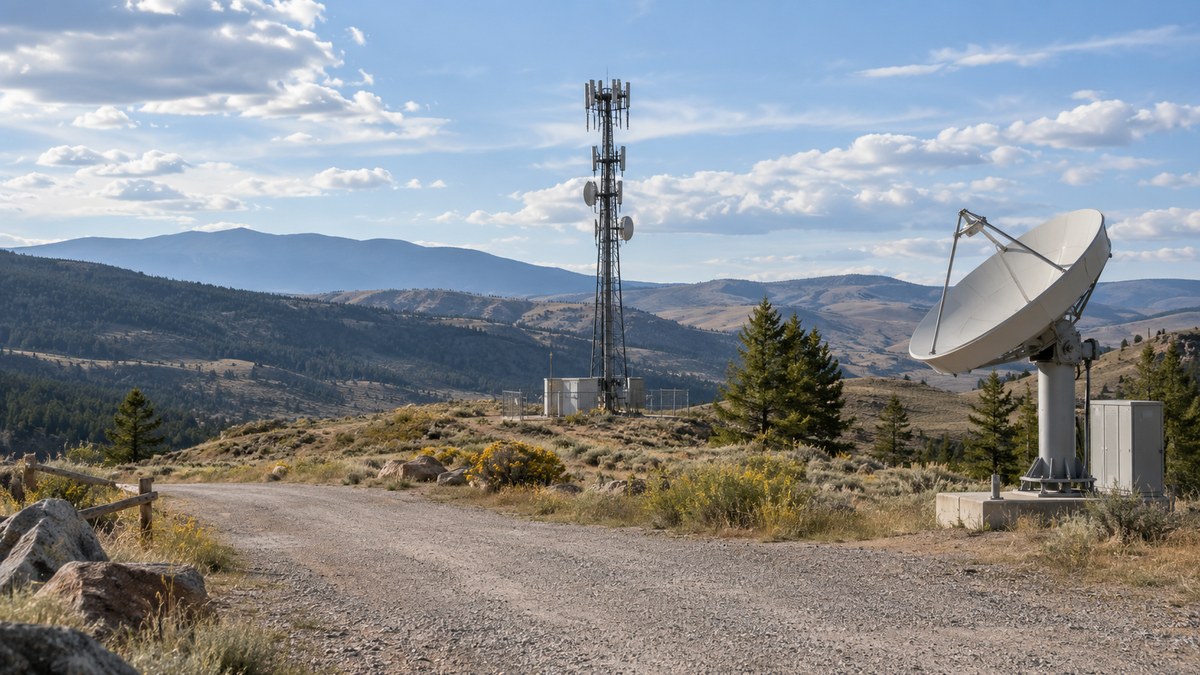
AT&T, T-Mobile and Verizon said Oct. 1 that they've entered into a joint venture agreement aimed at expanding connectivity in underserved parts of the U.S. That's a step past May 2026, when the three said they intended to form the venture. AT&T's announcement describes the point of it as making satellite-enabled connectivity easier to provide where terrestrial mobile service is limited. The carriers say it will help end dead zones.
What changes for your service right now: nothing. No new plan, no price, no add-on, no phone feature, nothing to sign up for. The carriers formalized a venture. They didn't launch a service, and they didn't say when one would arrive.
Paul Roth will serve as interim CEO while the venture searches for a permanent chief executive. A board with a representative from each of the three founding carriers will manage it.
What the carriers say it's for
- Making satellite-enabled connectivity easier to provide where terrestrial mobile service is limited.
- Keeping terrestrial networks as the primary service, with satellite connections supplementing them.
- Providing backup connectivity when terrestrial networks are unavailable during disasters or unusual disruptions.
- Pursuing common technical specifications and better direct-to-device access.
- Working with rural mobile network operators and satellite providers.
What wasn't announced
- Any launch or consumer-availability date.
- Which spectrum each carrier will contribute.
- Initial markets, a coverage map or a rollout order.
- Price, plan inclusion, eligibility rules or billing treatment.
- Supported devices or upgrade requirements.
- Whether initial service would carry only messaging, or voice and data as well.
Fierce Network independently reported the formal launch on Oct. 2 and confirmed Roth's appointment and the board structure. Its read: the announcement didn't provide substantially more operational detail than May's. The carriers still hadn't identified the spectrum they expect to pool, or disclosed other specific activities.
So the dead-zone framing is a forward-looking claim about a venture that was formalized Oct. 1. Neither the announcement nor Fierce Network's reporting offers deployment data, a timeline or a milestone that would show that result. Treat it as a stated goal, not as coverage you can expect by a certain date.
Separate satellite efforts continue
Existing carrier-satellite agreements remain in place, and each carrier may keep pursuing its own connectivity projects. Fierce Network points to T-Mobile's SpaceX service, AT&T's and Verizon's investments in AST SpaceMobile, and Verizon's Skylo messaging as examples. Those efforts stay separate from the joint venture, which means satellite connectivity can still look different from one carrier to the next.
How to judge coverage now
If you live, work, drive or travel through weak-signal areas, this announcement isn't a reason to switch carriers, stay where you are, buy a phone or wait for one. Compare the three on the terrestrial coverage they actually deliver today in the specific places you spend time. If off-grid connectivity matters to you, compare whatever satellite features your carrier offers today on its own. Check back on the joint venture once it announces a date, a spectrum plan or a service definition. Until then there's no shared product to compare.