


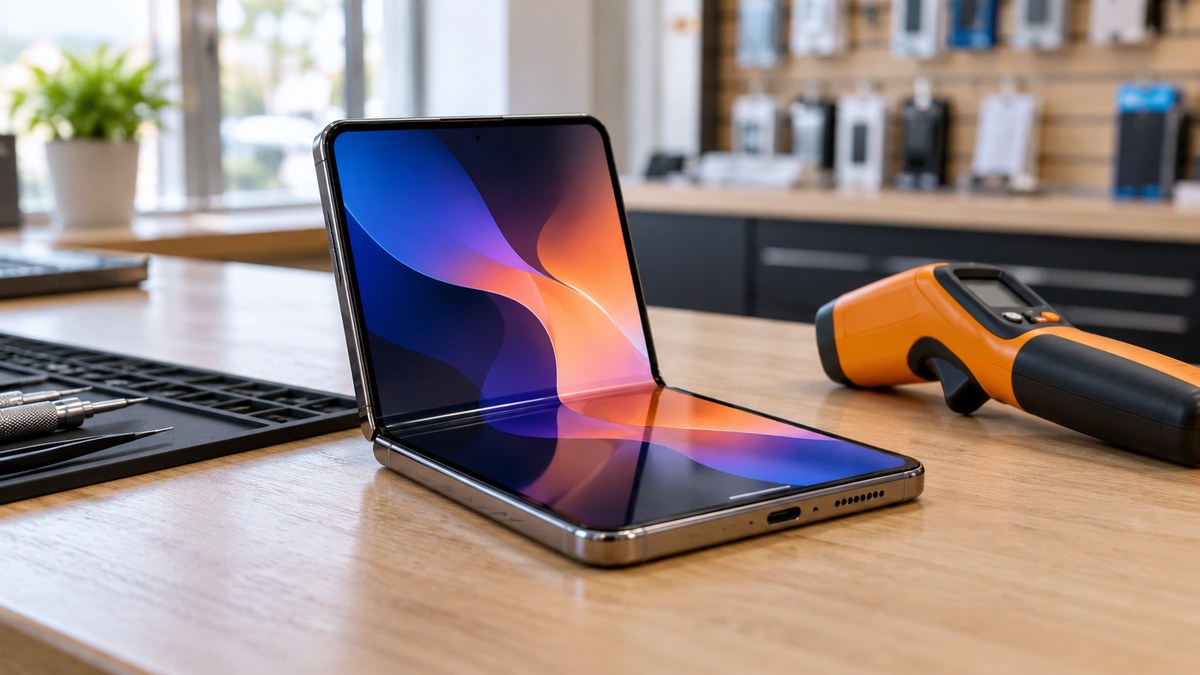
Apple's first foldable iPhone is scheduled to go on sale Oct. 23, and an early independent verdict is in. After a week with two review units, The Verge rated the $1,999 iPhone Duo 7 out of 10 on Oct. 21, calling it a fun but incomplete first-generation product best suited to early adopters.
Here's what that means if you're holding a preorder or planning to shop on launch day. The large inner display is a real strength, and the review backs that up. The rest is messier: unoptimized apps, a cramped cover screen, heat under some workloads, uneven battery life and a camera that trails the iPhone 18 Pro. If you want polished app support, predictable all-day battery life or the best iPhone camera, you have good reason to wait. If the big screen is what you're buying, test it thoroughly as soon as it arrives.
Apple's announcement lists the Duo at $1,999 with 256GB of storage, and 512GB, 1TB and 2TB versions are also offered. The outer display measures 5.4 inches, the inner one 7.6 inches. Touch ID moves into the side button in place of Face ID, and an A20 Pro chip runs iOS 27.1. The phone is eSIM-only worldwide, so it needs a carrier and plan that support eSIM. Apple lists an IP68 rating but warns that water and dust resistance can diminish with wear, and that liquid damage isn't covered under warranty.
What one week of testing found
The crease on the matte inner display was hard to see in ordinary use, The Verge's reviewers said, though it still showed up from some angles or in some lighting, and they could feel it. The 5.4-inch cover display struck them as cramped for common tasks, and they said the phone kept pushing them to unfold it.
App support is where things got uneven. Many third-party apps were unoptimized or only partly adapted to the Duo's displays, while fully optimized apps used the larger screen well. Split-screen multitasking worked in landscape orientation, but the reviewers said some multitasking behavior was hard to discover, and some of it worked differently from app to app.
The phone also got warm or hot during some third-party video and Google-app use, and during extended use of camera features that involve both displays. Keep the sample size in mind: two units, one week. That doesn't show that every Duo overheats, and it says nothing about how the hinge, inner screen or battery will hold up over time.
Battery: two kinds of measurement
Apple says the Duo lasts up to 24 hours per charge when both displays are used equally — a figure from testing with preproduction hardware, with the caveat that actual battery life varies. The Verge's reviewers landed elsewhere. One needed to recharge at least once during a normal workday. The other had about 30% left after roughly 6.5 hours of screen-on time while traveling and watching video over Wi-Fi. The numbers don't contradict each other. Apple's preproduction figure and two reviewers' real days measure different things.
Camera trails the iPhone 18 Pro
The Duo has no separate telephoto lens. Apple describes its 2x option as "optical-quality" telephoto; The Verge describes it as a crop. The review found the main camera adequate for everyday use but below the iPhone 18 Pro's.
What it costs
- Cash: $1,999 for the 256GB model.
- Apple Card Monthly Installments: $83.29 a month for 24 months, subject to credit approval and your credit limit. That totals $1,998.96 at 0% APR, essentially the cash price. Taxes and shipping are charged at the card's variable APR instead. Apple requires choosing AT&T, T-Mobile or Verizon at checkout, though it says the phone is unlocked.
- Apple Upgrade: a Klarna consumer lease, not a purchase or a loan, with 12- or 24-month terms subject to eligibility and creditworthiness. Advertised pricing starts at $57.99 a month for 24 months, or $1,391.76 before taxes. You return the phone at the end, so that total doesn't buy you the phone. You must select an eligible carrier, and ending the lease early may cost a substantial amount.
Keep the preorder or wait?
If the 7.6-inch screen is the reason you want this phone, the review's findings on that display are largely positive. Plan on a demanding first day: install your must-have apps, use the cover screen for routine tasks and run the phone through a full day of normal use. Check the return terms for your order so you know how long you have to decide. And if the real question is whether to keep your current iPhone or buy a conventional flagship, the camera gap, inconsistent app support and uncertain battery life are reasonable grounds to skip the first generation.