


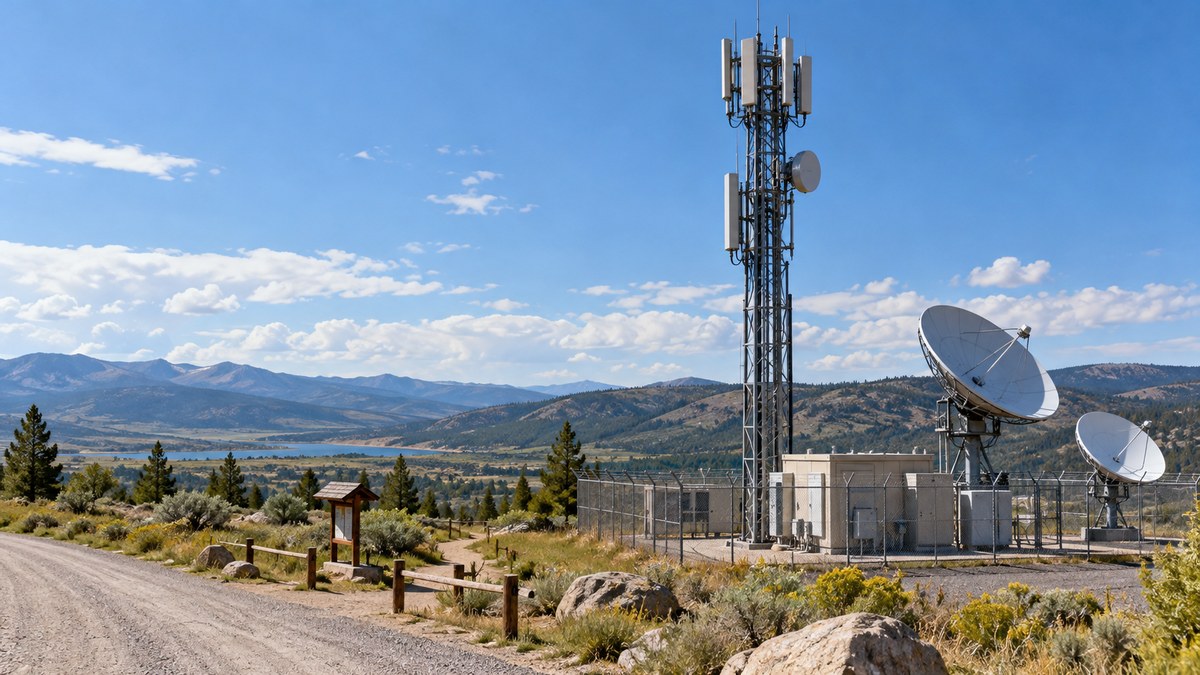
The satellite network that powers Apple's Emergency SOS and Find My via satellite is set to change hands if Amazon's acquisition of Globalstar closes. On Oct. 27 the FCC's Space Bureau signed off on Amazon Leo's application to take over Globalstar's licenses and roughly 25 megahertz of internationally harmonized mobile-satellite spectrum, ending the agency's review of Amazon Leo's $11.5 billion purchase of Globalstar, according to an FCC press release reproduced by the Benton Institute for Broadband & Society. Reuters and Fierce Network reported the approval independently the same day.
Your phone works the same today, and there's nothing you need to do. Amazon says it has an agreement with Apple to keep those satellite services running, Reuters reported. But the deal hasn't closed, and Amazon hasn't given a closing date. No source addresses whether eligibility, capabilities or cost for the Apple features could change once it does.
What the FCC approved
The two companies filed on May 26, 2026, asking for consent under sections 214(a) and 310(d) of the Communications Act. Their request covered Globalstar's space-station and earth-station licenses, its domestic and international Section 214 authorizations and an experimental license, according to the FCC notice that accepted the application for filing in June. Amazon would take 100% control of Globalstar, while Globalstar's U.S. subsidiaries keep their corporate identities and their FCC authorizations. Start to finish, the review took 154 days.
The price tag depends on who's counting. Fierce Network put the transaction at $11.57 billion, about $70 million above the FCC's figure. That gap looks like rounding, but both are the numbers as published.
Why iPhone and Apple Watch owners should care
Globalstar's network carries Emergency SOS via satellite and Find My via satellite on supported iPhones and Apple Watches. For owners of supported devices, the immediate question is whether those services will continue under Amazon's ownership. Reuters reported that the transaction would add roughly two dozen Globalstar satellites and its mobile-satellite spectrum to Amazon's holdings.
Amazon's stated agreement with Apple is the most useful fact here for owners of those devices, and it's also where the verified information stops. None of the sources say whether supported devices, eligibility, capabilities or cost for those Apple features will change after the transaction closes.
What is still unresolved
Clearing the license transfer doesn't close the deal, and it says nothing about Amazon's own direct-to-device constellation. That separate application, for as many as 5,105 satellites, is still pending, Fierce Network reported. An Amazon spokesperson gave Fierce no expected closing date for the Globalstar purchase. Reuters described direct-to-device technology as letting smartphones and other devices connect straight to satellites, and Fierce reported that Amazon plans to work with mobile-network operators and other partners. What nobody has announced: a price, a plan, a U.S. carrier partner, a coverage map, a device list or a launch date for any Amazon consumer direct-to-device service.
The purchase also sweeps in Globalstar's XCOM RAN private-5G business. Fierce reported that Amazon hasn't decided what it will do with that unit after closing.
The FCC's case for the deal is a forecast, not a result. The agency said the combined assets could support fixed and mobile services for residential, business and government customers, and it cited likely benefits: better data coverage in unserved or underserved areas, stronger emergency communications, growth in industrial and enterprise data services, and more intensive use of mobile-satellite spectrum. It found no likely material public-interest harm. According to Reuters, the FCC also said Amazon was preparing to introduce commercial satellite service by the end of 2026, though the reporting doesn't tie that date to satellite service on consumers' phones.
What to watch
Don't switch plans or buy hardware because of this approval. Two later events worth watching are the transaction closing and the FCC's decision on Amazon's 5,105-satellite application.