


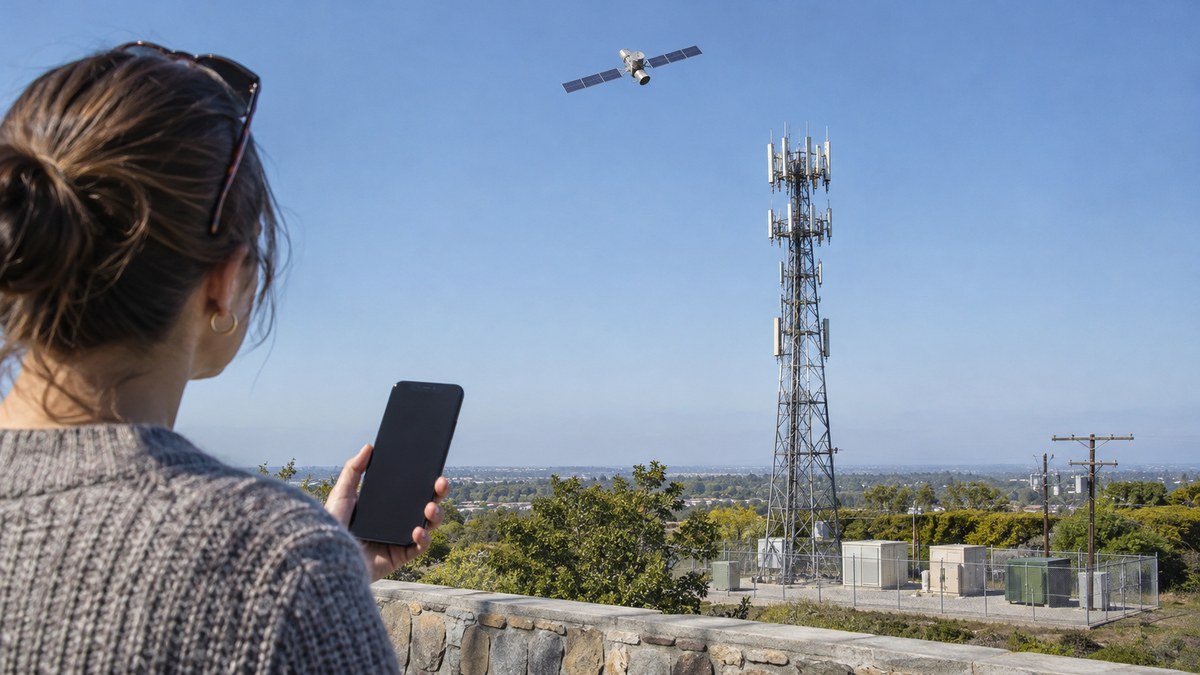
Federal regulators have started formally reviewing SpaceX's proposed purchase of a nationwide 800 MHz spectrum portfolio. Nothing has been approved. The first default terrestrial buildout milestone attached to the licenses is July 1, 2029. If you follow the race to put satellite service on ordinary phones, this is a real step. It just isn't anything you can buy or wait on today.
Total Telecom and The Space Tap reported Nov. 11 that the commission accepted the transfer applications for filing. The Space Tap identifies the notice as DA-26-1218, released Nov. 10 in WT Docket 26-313. Comments and petitions to deny are due Dec. 1, according to Total Telecom, with oppositions due Dec. 8. Acceptance for filing means the paperwork cleared an initial review, and nothing more: The Space Tap reports that the FCC can still return the applications if a closer look turns up defects. SaveOnPhone couldn't retrieve the FCC's own copy of the notice, so the notice details here come from those two reports.
What SpaceX wants to buy
Grain Management announced Oct. 8 that it had signed a definitive agreement to sell 100% of its nationwide 800 MHz portfolio to SpaceX. The spectrum is meant for direct-to-device service delivered over both ground and satellite networks, Grain said. The deal depends on FCC approval and customary closing conditions. Grain itself picked up the licenses only in August, acquiring them from T-Mobile in an exchange involving cash and Grain's 600 MHz spectrum.
The applications, filed Oct. 9, would transfer control of 546 paired licenses held by Prism License Co. 1 and Prism License Co. 2 to Starlink Spectrum Holdings, a wholly owned SpaceX subsidiary the filing identifies as Starlink Mobile. The Space Tap says the portfolio has up to 7+7 MHz (14 MHz total) at 817–824 MHz and 862–869 MHz across 173 economic areas. Those areas cover all 50 states, the District of Columbia, Puerto Rico and the U.S. Virgin Islands, or roughly 100% of the U.S. population. The retrieved official sources do not disclose a price. Total Telecom cites an outside estimate of about $8 billion, but the retrieved official sources do not confirm that estimate.
The 2029 and 2034 deadlines
The applicants' public interest statement spells out the default ground-network buildout benchmarks attached to this spectrum. In each license area, qualifying service has to reach at least 33% of the population or 25% of the geography by July 1, 2029, then at least 66% of the population or 50% of the geography by July 1, 2034. The filing also describes alternative satellite benchmarks running through 2029, 2031 and 2036. Those obligations stay with the licenses, Total Telecom reports, so they would bind SpaceX if the transfer is approved.
That puts the first default terrestrial milestone about two and a half years away and the second about seven and a half. Hitting a percentage benchmark is also not the same thing as covering any particular rural address.
Two approvals, not one
Clearing the transfer wouldn't by itself let SpaceX run satellite service on these frequencies. That takes a second decision. SpaceX has separately asked the FCC to add the frequencies to Starlink Mobile's supplemental-coverage-from-space operations, and The Space Tap reports that request is still pending. Grain keeps control of the licenses while the FCC reviews the deal.
What isn't known yet
The filing describes a hybrid network that blends ground and satellite service and connects with standard consumer devices. On the ground, it could use standards-based radios and antennas mounted on towers, rooftops and other structures. All of that is the applicants' description of their own plan, not an FCC finding or a measured result.
Total Telecom reports that 800 MHz may offer better obstacle diffraction and building penetration than higher-frequency spectrum. Total Telecom's caution is worth keeping in mind, though: real satellite performance would depend on satellite power, antennas and the available link budget — how much signal survives the trip between satellite and phone.
The retrieved sources do not establish a launch date, coverage map, retail price, plan structure, supported-phone list or relationship to an existing carrier plan. If you live with a weak signal, the 2029 deadline is worth watching. It isn't a reason to delay a phone or plan decision.